Vacancy doesn’t fix itself. Not on a corridor like North Maize Road, where empty bays quietly drag down adjacent tenants, investor confidence, and the “why would I stop here?” instinct that decides whether a driver becomes a customer.
Here’s the thing: the turnaround wasn’t magic. It was planning that acted like operations, measured, iterative, and a little stubborn.
The Vacancy Problem (and why it was also a gift)
Drive a corridor with too many dark storefronts and you feel it immediately. The lighting seems harsher. The parking lots look bigger. Even the “open” signs feel apologetic.
On North Maize Road, vacancy wasn’t just an economic stat; it was a behavioral trap. Longer leasing cycles reduced churn of ideas, which reduced reasons to visit, which reduced foot traffic, which made leasing even harder. A loop.
Now, this won’t apply to everyone, but in my experience the real opportunity inside vacancy is optionality: you can reshape the mix without fighting entrenched leases. That’s rare. And if you’re data-led, it’s incredibly usable.
The corridor’s shift started with a blunt question: What are people trying to do here, and what are we failing to offer them? That question helped reframe places like NewMarket Square not just as retail space, but as a chance to rebuild demand around how people actually move, shop, and spend time.
A planner’s view: tenant mix isn’t “retail,” it’s a system
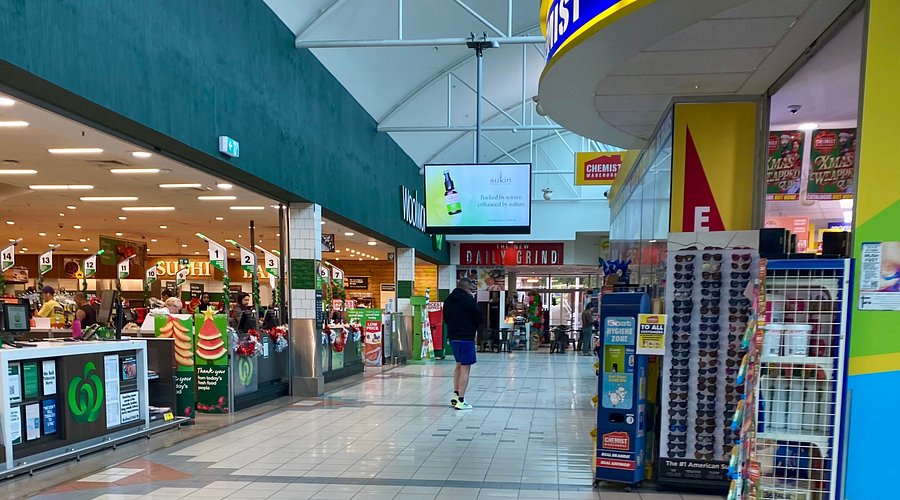
A corridor doesn’t need “more stores.” It needs fewer dead ends in the customer journey.
So the work began with mapping: existing anchors, category gaps, adjacency logic, and time-of-day performance. Not glamorous. Very effective. When you pair that with consumer behavior, repeat trips, trip chaining, price sensitivity, you stop guessing and start designing demand.
A quick, practical way this shows up:
– Gaps (missing categories) get identified with trade-area analysis and spending leakage models
– Misfits (tenants that don’t match the corridor’s role) show up in weak conversion and low repeat visitation
– Adjacency wins emerge when complementary uses cluster (coffee near services, daily needs near pickup, etc.)
And yes, retail innovation matters. Pop-ups and flexible leases aren’t “cute programming.” They’re risk management tools for landlords and market-testing tools for brands.
One-line truth:
Empty space is expensive space.
Bold take: dashboards beat vibes, every time
If you’re serious about corridor recovery, you measure it like you’d measure a supply chain. Foot traffic, dwell time, leasing velocity, permit cycle time. Put them on a shared dashboard and suddenly the conversation changes from “I feel like it’s better” to “Block B is up 18% on Saturday afternoons, but conversion is flat, why?”
A specific benchmark helps anchor the discussion. For example, U.S. retail vacancy has hovered in the mid, single digits in recent years (Moody’s Analytics has reported national retail vacancy around that range across multiple quarterly releases). When a corridor spikes beyond its region’s typical band, that’s not a “normal cycle.” That’s a positioning problem, a connectivity problem, or both.
(Usually both.)
Assets, gaps, and the uncomfortable middle
The corridor had real strengths: traffic exposure, developable parcels, proximity to growing rooftops, and enough scale to support anchors plus supporting convenience.
But the gaps were loud once you looked:
Inventory + infrastructure gaps that held things back
Retail inventory wasn’t just underfilled; it was misaligned. Too much space in the wrong format. Too little flexibility for new concepts. Meanwhile, digital capacity lagged, meaning tenants couldn’t easily do real-time promotions, omnichannel pickup, or targeted offers based on actual patterns.
Supplier fragmentation and skills gaps showed up too (loss prevention, merchandising, analytics). It sounds “inside baseball,” but those operational details are exactly why two similar corridors can perform wildly differently.
The fix wasn’t one big move. It was coordination: category plans, shared data norms, and targeted upgrades that made the corridor easier to operate in.
Place-making: less “beautification,” more behavioral engineering
Some people treat place-making like decoration. Planters, banners, maybe a mural. That’s not what moved North Maize Road.
Place-making worked because it targeted dwell time and comfort. People linger where they feel safe, oriented, and rewarded for walking 200 more feet.
The corridor leaned into iterative design, test, count, adjust. Prototype streetscape changes. Watch pedestrian flow. Rework storefront orientation. When you do that, you’re not hoping for vitality. You’re building it.
And community engagement wasn’t a box-check. Residents helped define what “activation” meant for them, which prevented the classic mistake of programming that looks great in a planning memo and fails in real life.
Accessibility (the part everyone supports, until it’s time to spend)
Look, accessibility is moral. It’s also economic.
Curb ramps, crosswalk timing, tactile guidance, safer crossings, these reduce friction for everyone, not just people using mobility devices. Parents with strollers. Older adults. Someone carrying two bags and trying not to sprint across five lanes.
When access improves, pedestrian volumes rise in the areas where it matters: near entrances, corners, and mid-block connectors. That’s where leasing value goes up.
The smart move was treating accessibility as performance infrastructure, not compliance. Measure the route quality, map the breaks, fix the choke points, then track the change in movement patterns.
Mixed-use: the quiet engine of “always on” corridors
Mixed-use design did a simple thing extremely well: it filled the dead zones between trips.
Ground-floor activation plus nearby residential and civic uses created a steadier rhythm, morning errands, lunchtime services, evening casual visits. A corridor that only lives on Saturday afternoons is fragile. A corridor with multiple peaks is investable.
Design details mattered more than people like to admit. Compact blocks. Entrances you can actually find. Connections that feel obvious, not theoretical. When these align, you see it in metrics: improved cross-street connectivity and better per-square-foot outcomes where frontage stays active.
Retailers notice that stuff (even if they pretend they don’t).
Zoning and incentives that actually unlocked investment
The most effective zoning changes weren’t dramatic. They were practical.
Use-by-right for low-risk retail experiments. Density bonuses near transit-adjacent sites. Parking-lite standards where the market could handle it. These cut uncertainty, and uncertainty is what kills deals.
Incentives worked best when they were performance-based: tied to job creation, storefront activation, remediation, or resilience upgrades. That structure prevented the familiar problem of giving away value with no measurable return.
One underrated benefit: predictable timelines. Faster permitting isn’t sexy, but it’s the difference between “we’re opening” and “we’re reconsidering.”
Collaboration: the only way this stays real
A corridor doesn’t change because one department has a plan. It changes because multiple actors stop working at cross purposes.
North Maize Road’s approach built shared governance habits:
– A common dashboard for permits, upgrades, leasing progress, and street improvements
– Workgroups that included residents, small businesses, transit planners, schools, and property owners
– Pilot grants and micro-programs that tested ideas before scaling them
– Public reporting that made accountability normal (not political)
I’ve seen collaborations fail when they chase consensus. This one leaned toward alignment instead: agree on outcomes, agree on measures, then argue productively about tactics.
Measuring success: investment, foot traffic, and dwell time (the useful trio)
These three indicators tell the truth faster than most narratives do.
Investment signals confidence, but only if you separate public subsidy from private capital and track what each dollar actually triggers.
Foot traffic shows reach and awareness across time and block faces.
Dwell time reveals whether the corridor is merely visited or genuinely used.
Pair sensors with periodic surveys, and you can connect the numbers to the “why”: safety perception, tenant mix, pricing, access, programming. Data without context misleads. Context without data turns into theater.
So what’s next? Momentum is fragile.
Early wins can be deceptive. A few new leases, a couple of busy weekends, and people start believing the corridor is “fixed.” That’s when it slips.
Sustaining North Maize Road means scaling what performed, killing what didn’t, and tightening the feedback loop:
Scalable pilots that combine incentives with place-making. Clear performance benchmarks. Retail experiments that match neighborhood needs, not just developer pro formas. Community engagement that functions like governance (not a quarterly listening session).
If the corridor keeps treating planning as a living operating system, measured, adjusted, and honestly reported, it won’t need luck to stay vibrant. It’ll have evidence.
Categories: Shopping
